

Minister of State for Federal Education and Professional Training, Wajiha Qamar, has emphasized that without fostering a sense of collective ownership, true progress in education cannot be achieved. Alongside the growing challenge of population increase, she stressed that community engagement, addressing the economic causes that keep children out of school, and the positive use of modern technology are indispensable.
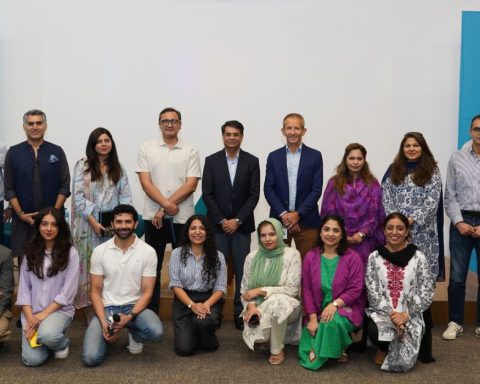
She was speaking on Monday at a ceremony on “Promoting Literacy through Digitalisation” collaboration with the Ministry of Education, JICA, AQL, the Pakistan Institute of Education, and the National Commission for Human Development. Federal Secretary for Education Nadeem Mehmoob, Director General PIE Dr. Shahid Soroya, JICA Specialist for Youth and Adult Literacy Bilal Aziz, MoE focal person Sana Essa, UNESCO Country Representative Fuad Pashayev, and other stakeholders attended the event.
Minister Wajiha Qamar and Secretary Education Nadeem Mehboob also launched two key initiatives — “Communication Training for Non-Formal Teachers” and “Code of Conduct for Non-Formal Teachers’ Skills” — aimed at improving teachers’ communication abilities and aligning professional skills with structured standards.
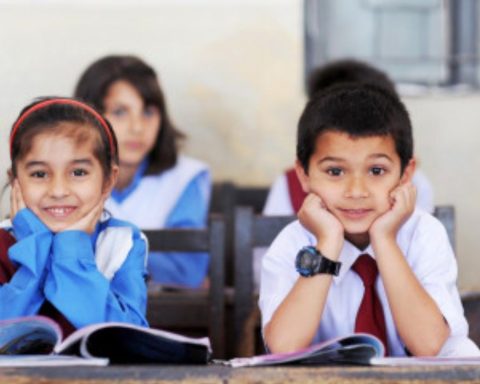
The minister said that many children are forced to drop out of school to support their families economically. By linking education with skills, such children can be brought back to classrooms, as parents will see both education and long-term livelihood opportunities for their children. She reiterated that the education emergency is not only about enrolling out-of-school children but also about ensuring quality education and improved learning environments for those already in schools.
She also highlighted initiatives such as the Ministry of Education’s partnership with the Ministry of IT to launch programs on TikTok to spread awareness about literacy and digital learning, noting that more such platforms could be leveraged effectively. The minister praised the efforts of Secretary Nadeem Mehboob, JICA, UNESCO, and AIOU, while commending the technical leadership of PIE DG Dr. Shahid Soroya.
Read More: Mineral Partnership Marks New Chapter in US-Pakistan Ties
Federal Secretary Education Nadeem Mehboob underscored that literacy is not just a fundamental right but also the basis of Pakistan’s social cohesion, economic growth, and democratic stability. He recalled that Prime Minister imposed a National Education Emergency in May 2024, under which the Ministry is leading efforts to promote literacy and non-formal education. A comprehensive Non-Formal Education Policy Framework is being finalized, covering second-chance education, digital literacy, and access for marginalized groups.
He further said that the national target is to enroll 25.3 million children in schools and provide literacy opportunities to 70 million adults. Under the “Each One Teach One” campaign, every literate individual will educate one illiterate person. Flexible education models are being introduced through BECS and NEF, while e-learning platforms and mobile applications will make education more accessible and inclusive. He added that students completing five grades under the non-formal system will now be examined and certified by the Federal Directorate of Education, making them eligible for admission into grade six.
AIOU Vice Chancellor Dr. Nasir Mahmood highlighted that Pakistan’s literacy rate rises by only 1% against a 2.7% annual population growth, making targets difficult to achieve. He pointed out that the problem lies more in implementation than in policy design.
NCHD Director General Ali Asghar stated that the Commission has introduced the “Each One Teach One” program at the district level, participating actively in the education emergency. This year, NCHD aims to bring 100,000 identified out-of-school children into the education system.
DG PIE Dr. Muhammad Shahid Soroya presented data on literacy trends in Pakistan, while MoE focal person Sana Essa gave a presentation on non-formal education initiatives. JICA and PIE also shared insights on digital literacy, and UNESCO Country Representative Fuad Pashayev highlighted UNESCO’s initiatives and support for literacy improvement in Pakistan.